
First published: 26 October 2026.
Score: 38/100
Verdict: Avoid
Last verified: 26 October 2026
How we score: How We Review
P-Protect Patches is a transdermal patch marketed for men’s wellness. The packaging calls it a prostate health support formula. The merchant claims it supports healthy blood circulation and helps urinary comfort. Each pack contains 10 patches. And, it is sold as roughly a one-month supply.
Multiple third-party websites are promoting it for prostate health and urinary comfort.
We checked the
- official website,
- the returns/refund page,
- available product materials,
- independent sources.
The biggest gap is simple. There is literally no ingredient list or dose information available on the pages we could review.
| Category | Score |
|---|---|
| Ingredient Evidence & Quality | 7 / 20 |
| Dosage & Formulation | 4 / 13 |
| Transparency & Testing | 3 / 12 |
| Safety & Suitability | 6 / 12 |
| Independent Customer Evidence | 2 / 10 |
| Buying, Shipping & Refunds | 5 / 9 |
| Value for Money | 4 / 8 |
| Marketing Honesty & Claims | 7 / 16 |
| Total | 38 / 100 |
Product Type: Prostate Support
Exact Product Trial: No
Main Concern: We couldn’t find product label or ingredients list on the official website
Independent Reviews: Almost no evidence.
Verdict: Avoid
Avoid means we would not buy it on the public record we could check. It does not mean the patches is fake or illegal.
Who this review is for
This P-Protect Patches review is for Men comparing different prostate-support options. It is for men who want to see what is actually disclosed & what is not before they buy. It may also help family members of such men who are researching the product before making a purchase. It is not a diagnosis of urinary symptoms. And, it is not a reason to skip a doctor appointment if symptoms are new or worsening.
Urinary changes in men are common. However, these symptoms aren’t always caused by the same issue. Frequent nighttime bathroom trips, a weaker urine stream, or the feeling that your bladder isn’t completely empty can stem from several different factors. Some of these aforementioned symptoms improve with time or simple changes. But, others may need a clinician’s evaluation. A wellness patch does not replace that step.
1. Ingredient Evidence & Quality – 7 / 20
We couldn’t find a complete ingredient list or dosage amounts on the official product sales pages, terms, privacy policy, or returns page we reviewed. Some affiliate sites do name common prostate botanicals such as saw palmetto, pumpkin seed, pygeum africanum, or lycopene. But, these lists conflict. And, they aren’t confirmed by a ingredients label in public domain or the brand’s own pages.
Research does exist on several of these ingredients for urinary symptoms. And, it is real. But, it still does not tell us what is in this prostate support patch or how much of a particular ingredient is actually present in the patch. We therefore do not credit those studies to P-Protect Patches until we can verify the formula.
Saw palmetto extract is one of the better-studied botanicals in men’s health category. As per a large randomized trial published in 2011, saw palmetto extract was no more effective than placebo for lower urinary tract symptoms. The previous statement held true even when the dose was increased.
As per other research studies, the results have been mixed. Pumpkin seed, pygeum africanum, and beta-sitosterol also appear in prostate-support products. There’s some human data available on these. But, the results are not consistent enough to be called as proven fixes. And, none of that research automatically applies to an unlisted patch formula. Until we find actual ingredients and amounts on the seller’s site, those studies stay background information, not evidence for P-Protect Patches.
Also, we found no clinical trial of the finished P-Protect patches. But, that is common for these type of products.
Why 7/20: Typical ingredients may be present, but a buyer on the website cannot verify them. Without a confirmed formula, we can properly assess ingredient evidence.
2. Dosage & Formulation – 4 / 13
Without published amounts, dose cannot be compared to studied levels. Besides, a patch also raises a few extra questions:
- how much of any ingredient reaches the body through the skin?
- for how long?
And, there’s no product-specific absorption or wear-time data available. Application frequency and placement instructions are also not clearly published on the pages we checked.
This matters because evidence from an oral supplement cannot automatically apply to a patch containing the same ingredients. The formulation, route of administration, dose, and amount absorbed can all affect the outcome.
Why 4/13: The format is clear. But, the information we needed to judge the formulation is not.
3. Transparency & Testing – 3 / 12
The official website displays package prices. We could also find general product description. And, it identifies BuyGoods as the retailer. There’s a disclaimer stating that the website’s claims have not been evaluated by the US FDA.
But, there is
- no public supplement facts panel,
- no certificate of analysis,
- no named third-party test.
Still, the brand recommends checking the product label or packaging for specific details. If you still have questions, you can always reach out directly to the manufacturer for clarification. That wording suggests a physical ingredient label does exist. But it is not shown for buyers to see before purchase. And, conflicting ingredient lists on affiliate sites make the gap larger.
Conflicting ingredient lists pop up across multiple sites. Some list four core botanicals along with standard vitamins and minerals. others tack on stinging nettle or beta-sitosterol.
To make matters worse, press releases and promotional articles hype up the product’s benefits without ever showing an actual Supplement Facts panel. This pattern is common with new wellness products. But, it leaves a buyer with no reliable way to confirm what is inside the packet.
A photo of the current packaging label, or a written ingredients list from the seller that matches the physical product, would close most of this gap. And, we did not find either.
Why 3/12: Some commercial details are available. But, the essential formulation and testing details are not.
4. Safety & Suitability – 6 / 12
We cannot make a reliable product-specific safety assessment without knowing the complete formulation and individual ingredient amounts.
Unknown formula means unknown allergy or side-effects risk. Patch adhesives can irritate skin. Men experiencing urinary symptoms should keep in mind that several underlying factors could be at play. The brand uses standard structure/function wording – complete with the usual disclaimer that it isn’t meant to diagnose, treat, cure, or prevent any disease. But that legal coverage still doesn’t excuse the lack of a clear, accurate ingredient list.
Why 6/12: General disclaimers are present. But, product-specific safety cannot be assessed without the formulation details.
5. Independent Customer Evidence – 2 / 10
The TrustPilot pages we found were associated with Lovable-hosted websites. These include pprotectpatch.lovable.app. However we were expecting a clearly verified profile for the seller’s official domain.
The linked profile showed no customer reviews at the time of our check. Other similarly named profiles had very small numbers of reviews. These are not enough to establish whether the product consistently works, whether customers are satisfied, or how refunds are handled.
We found a Reddit post about P-Protect Patches in a community focused on Pokémon card deals.
The post uses a personal-story format and links readers to another affiliate website. We could not independently verify the author’s identity, purchase, or claimed experience. We therefore do not count it as reliable evidence of product effectiveness.
We also reviewed third-party promotional material, including a P-Protect article on La Valley Recovery and an article published by Your Health Magazine.
These pages may offer information about how the product is being marketed, but their existence does not establish independent customer experience.
Therefore, it is safe to say that we found almost no independent reviews on major platforms.
- Trustpilot profiles linked in affiliate material are sparse or tied to temporary domains. They contain little usable feedback.
- Reddit threads appear in unrelated communities and read as promotional.
- No Amazon listing was available at the time of review.
- Sales-page claims of positive experiences exist, but we treat those as marketing, and not independent evidence.
However, that does not prove the product fails for everyone. It does mean there is no independent record we can use to balance the sales-page claims.
Why 2/10: There is online discussion. It does not provide a reliable picture of real-world results.
6. Buying, Shipping & Refunds – 5 / 9
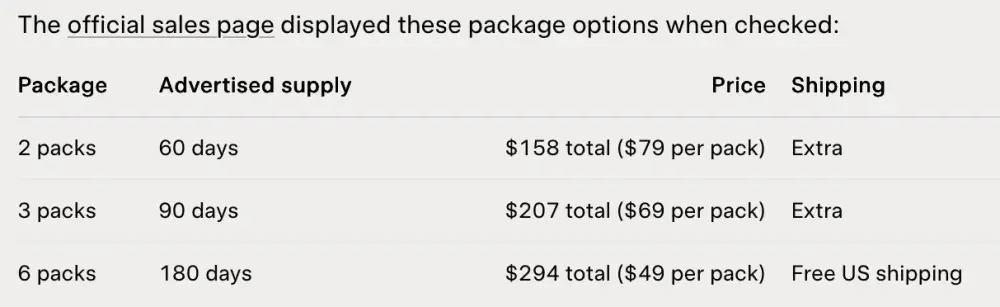
The P-Protect Patches is sold through the official site only. BuyGoods is listed as the retailer of record in available materials. Bundle pricing has been reported around $79 per pack for smaller quantities. And, there’s lower per-pack prices for larger bundles.
It is wise to check the current checkout process. There’s support contacts listed in secondary sources. These include pprotect@bestcsupport.com and a toll-free number.
The refund terms differ depending on where you look. Sales and homepage language often describes a 60-day 100% money-back guarantee, sometimes with ‘no questions asked’ or ‘within 48 hours’ wording.
The returns page requires
- return authorization within 60 days,
- shipping the product back at the buyer’s cost,
- inspection before a refund is approved,
- contains language about product condition
- possible exclusions that do not fully match the simpler sales-page promise.
We confirmed this discrepancy.
While the sales page tells you the refund is simple: contact the company, no questions asked, money back quickly. The returns page speaks an entirely different story. Both statements can be true at the same time. But only if the seller treats the official refund policy as the binding rule and the sales page as mere marketing talk.
Unfortunately, you won’t know which rule actually applies until you try to make a return. Before placing an order, send a quick email to customer support to get two things in writing:
- whether the exact package you’re buying qualifies for a full refund,
- which policy – the sales page or the return page – takes precedence.
- keep the reply for future requirements.
Why 5/9: Pricing and contact details are available. The conflicting refund language reduces confidence.
7. Value for Money – 4 / 8
The advertised price ranges from $49 to $79 per pack. That is a meaningful commitment, particularly when the larger packages require several months of upfront spending.
But, price alone cannot tell us whether a product offers good value. That requires
- a reasonable understanding of what is in the product,
- whether it is suitable for its intended use,
- what evidence supports the expected benefits.
Without a clear formula or exact dosage, that value is almost impossible to measure. Sure, a patch format is convenient for anyone who hates swallowing capsules. But convenience doesn’t guarantee that the product delivers a meaningful dose of active ingredients.
Why 4/8: Prices are published. Value cannot be assessed without knowing the contents inside.
8. Marketing Honesty & Claims – 7 / 16
The official website describes P-Protect Patches as the ‘#1 Men’s Wellness Support Formula’. It claims their product promotes energy, balance, and confidence. Third-party promotional pages make additional claims about prostate support and urinary comfort.
The central problem is the gap between these promotional messages and the evidence we could verify.
The core claims stay mostly in structure/function territory (support, helps, wellness). That is better than disease-treatment language. The problem is
- the gap between the confident sales framing and the missing label.
- heavy affiliate content,
- conflicting ingredient lists across sites,
- mismatched refund language also reduce the score.
Press releases and affiliate articles exist, but they do not substitute for product transparency.
Why 7/16: The language is not extreme. The supporting details are still missing.
Final score: 38/100
7+4+3+6+2+5+4+7=38
What can raise the Score?
A higher score would need a few concrete things that are currently missing.
- A clear, dated photo of the product label with every ingredient and amount listed.
- Confirmation that the formula does not change across batches.
- Any independent testing document that can be opened and checked.
- A refund policy that says the same thing on the sales page and the returns page.
- And at least some independent customer feedback that is not generated by affiliate campaigns.
None of these are unusual requests. They are the minimum that lets a buyer evaluate the product instead of the marketing.
FAQs
Is P-Protect a Scam?
P-Protect Patches is not a scam on the evidence we could check. It appears to be a real product sold through a known retailer. The score is low because the formula is not publicly disclosed, independent reviews are almost nonexistent, and the refund language is inconsistent.
What is actually in these prostate support patches?
We could not verify a complete ingredient list or any doses from official pages. You need to ask the seller in writing for the current label before you buy.
Is there a clinical trial of the final product?
We did not find one. That is common. It is not the only reason for the score.
Do the refund terms match what the homepage says?
They differ. The sales language is simpler than the written returns process. Read the returns page and get confirmation in writing if the guarantee matters to you.
Are the online customer reviews trustworthy?
Most of the content we found is promotional or tied to temporary profiles with little history. We could not verify enough independent experiences to judge real-world results.
Can I trust the ingredient lists I see on other websites?
Not without confirmation. Different affiliate pages list different ingredients. Until the seller provides a label that matches what is actually in the pouch, those lists should be treated as unverified.
What should I do if I already ordered?
Check the returns page and the email you received after purchase. Request return authorization in writing if you want a refund, and keep the tracking number.
Verdict: Avoid
P-Protect Patches might sound tempting if you hate swallowing pills, but convenience isn’t proof that they actually work.
Also, the claims on the official site stay mostly in wellness language. But a buyer cannot see what is in the product, independent evidence is almost absent, and the refund promise on the sales page does not fully match the returns page. Those gaps are large enough that we would not treat this as a reasonable buy on the public record we could check.
Who should avoid it
- Anyone who needs to know exact ingredients due to allergies, current medications, or existing medical conditions.
- Anyone experiencing new or worsening urinary symptoms who hasn’t seen a doctor or healthcare provider yet.
- Anyone assuming the money-back guarantee is simple without reading the fine print on the official returns page first.
Better first steps
If urinary symptoms are bothersome, a clinician can help identify the cause.
If you still want to try a supplement, choose one with a public ingredients label, disclosed doses, and independent reviews that you can actually read.
Disclosure
SwasthyaAlly is an educational website. It doesn’t provide medical, nutrition, legal, or financial advice. Some links may be affiliate links. See our Disclaimer and Affiliate Disclosure for full details.